Pistachio Pesto Linguine | Menguy’s
 10 min
 10 min
 20 min
Love pasta and looking for an alternative to traditional Genovese pesto made with pine nuts? Discover this linguine recipe featuring a pesto sauce made from our delicious dry-roasted and salted pistachios! With its creamy texture and delicately fragrant taste, this twisted pesto will surprise your taste buds and those of your guests. Very easy to prepare, this recipe comes together in just a few simple steps. Follow along and find out how to elevate your linguine—and all your favorite pasta dishes—with this flavorful pesto!
Ingredients
For 4 persons :
200g Menguy’s Roasted and Salted Pistachios
10 fresh basil leaves
35g grated Parmesan cheese
60g extra virgin olive oil
1/2 clove of garlic
Salt & pepper, to taste
350g linguine
Method
- A food processor or blender
- A large pot
- A colander
- A knife and cutting board
Blend the Pistachios
Start by pouring the shelled pistachios into a blender or food processor. Blend at medium speed for a few seconds, then gradually increase the intensity. The goal is to get as smooth a paste as possible. Next, drizzle in the olive oil while continuing to blend.
Finish the Pesto
Peel the half-clove of garlic and finely crush it using a knife or a garlic press. Add it to the blender along with the roughly chopped basil and grated Parmesan. Blend again, pausing a few times to scrape down the sides of the bowl to ensure everything is thoroughly incorporated. If your pistachio pesto feels too thick, add a little extra olive oil until it reaches a smooth and creamy consistency. Taste and adjust the seasoning with salt and pepper according to your preferences.
Cook the Pasta
Bring a large pot of salted water to a boil, then drop in the linguine. Cook according to the package instructions, making sure to keep them al dente. Once the pasta is cooked, drain it quickly, keeping a small ladleful of the pasta cooking water. This will help thin out the pesto when mixing it with the pasta, if needed.
Mix and Serve
Put the linguine back into the still-warm pot and add the pistachio pesto. Toss well to coat every strand of pasta with the sauce. If the texture feels too dense, gradually stir in the reserved cooking water. Serve immediately in shallow bowls and top with Parmesan shavings for a gourmet final touch.
For even more crunch, scatter a few crushed roasted pistachios on top of your dish before serving. You can also garnish your plate with a few fresh basil leaves to elevate the presentation.
The Menguy’s Twist: Add extra pistachio pieces for a lovely crunchy texture!
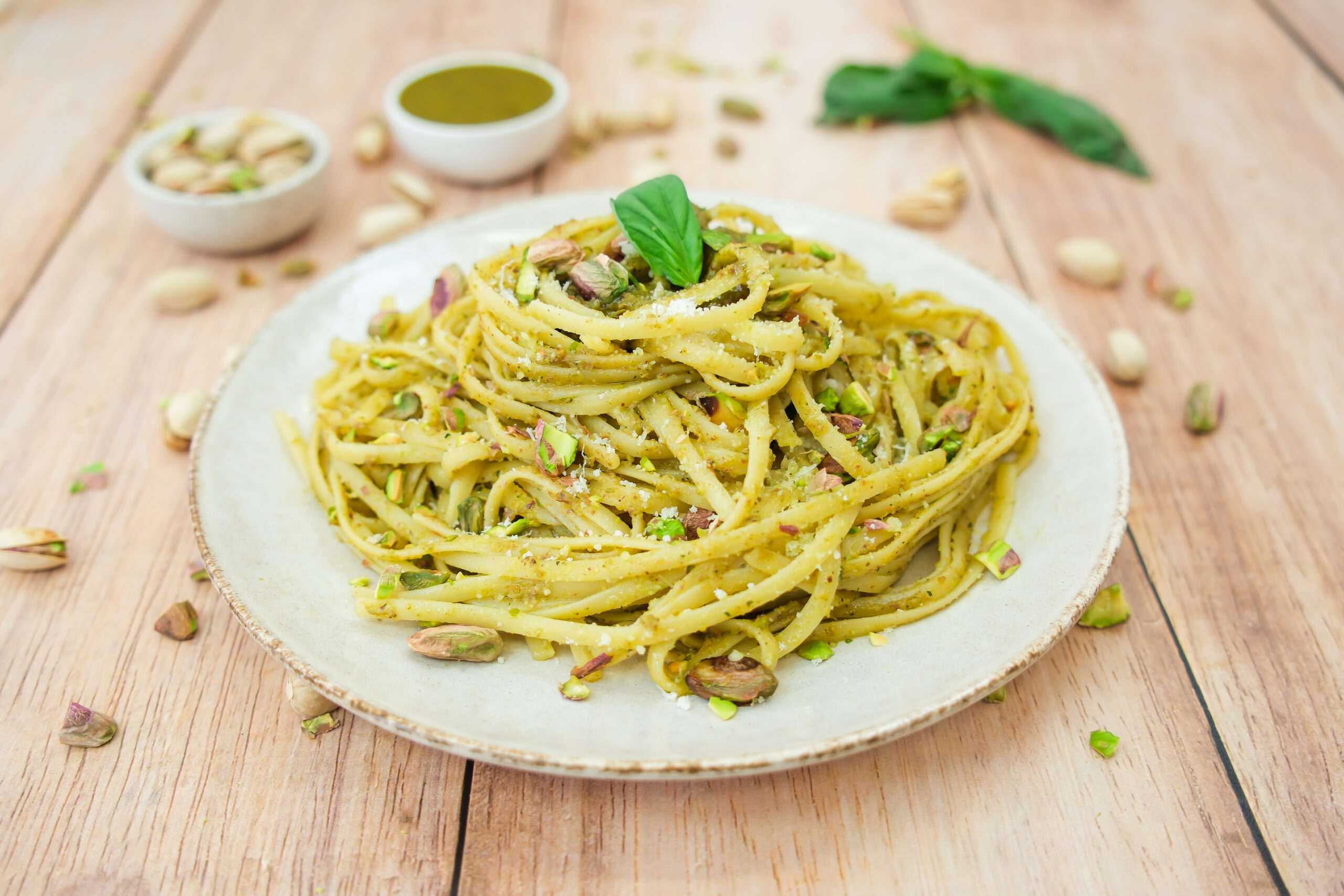
The Menguy’s Twist: Add extra pistachio pieces for a lovely crunchy texture!
Our answers to your questions
Quelle autre graine apéritive puis-je utiliser ?
Si vous souhaitez varier les saveurs, vous pouvez remplacer les pistaches par nos noix de cajou grillées et salées pour réaliser un pesto de cajou onctueux et à la saveur très douce. Vous pouvez également essayer avec nos cacahuètes grillées et salées pour un pesto plus intense !
Peut-on remplacer le parmesan ?
Oui, vous pouvez remplacer le parmesan par du pecorino pour une saveur plus corsée, par du Grana Padano pour une saveur plus douce, ou encore par de la levure maltée pour une version végétalienne.
Comment conserver le pesto de pistache ?
Le pesto de pistache se conserve jusqu’à 5 jours au réfrigérateur dans un bocal hermétique. Ajoutez simplement un filet d’huile d’olive sur le dessus pour éviter l’oxydation.
Avec quelles autres pâtes puis-je utiliser ce pesto ?
Le pesto de pistache s’accorde parfaitement avec des tagliatelles, des pennes ou des spaghettis. Il fonctionne aussi très bien en sauce pour des gnocchis ou des raviolis frais.
Peut-on utiliser ce pesto autrement qu’avec des pâtes ?
Absolument ! Ce pesto de pistache est très polyvalent. Vous pouvez l’utiliser en tartinade sur du pain grillé, comme base pour une pizza maison, en sauce pour accompagner des légumes rôtis, ou même pour napper un filet de poisson ou une volaille grillée. Il se marie aussi très bien avec des salades, en le diluant légèrement avec un peu d’huile d’olive et de jus de citron.